Water Management Solutions
Joint Repairs (MJS)
Targeted subsurface solutions designed to fill hidden voids, restore bearing support, and reduce or arrest settlement-related movement beneath the structure.
Proprietary Waterstop Replacement
An inflatable seal installed in a drilled hole to replace failed waterstops in existing joints.
Pressure-Rated Performance
Accommodates pressure heads up to 150 psi and depths exceeding 300 feet.
No Divers Required
Eliminates the need for divers and avoids introducing chemicals that could contaminate water supplies.
Removable & Serviceable
Can be removed, replaced, or inspected via remote camera for long-term maintainability.
overview
A purpose-built system for controlling leakage through existing joints
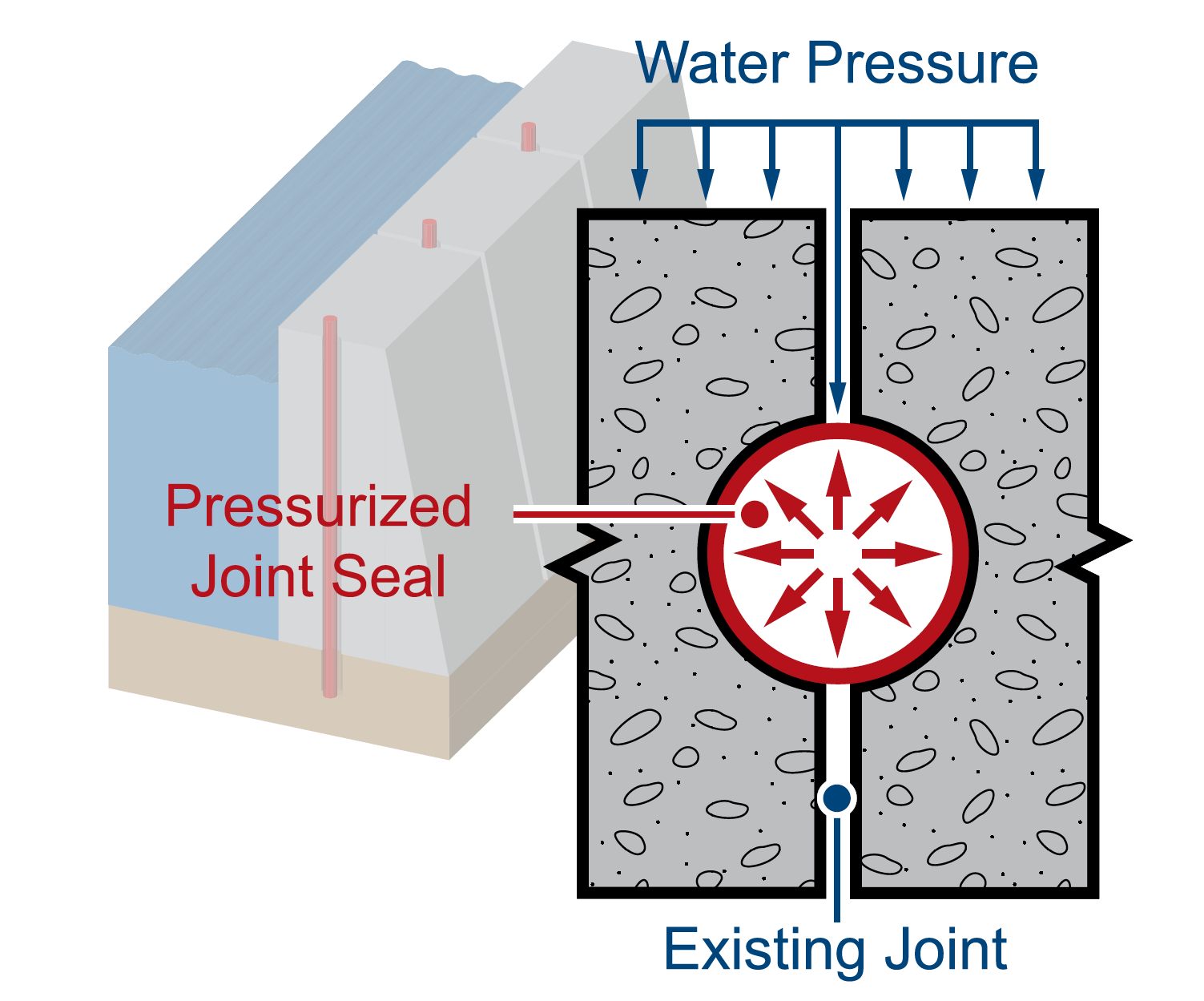
The MJS (Monolith Joint Seal) system is a proprietary replacement waterstop designed to restore water control at existing joints in heavy concrete structures. It is installed in a drilled hole along the joint, uniformly pressurized to offset hydrostatic pressure, and designed to maintain water-tightness as the joint opens and closes over time.
Unlike surface-applied sealants or injection-only approaches, MJS is intended to replace the function of the original waterstop rather than simply patch the symptom. The system uses an inflatable rubber seal that ensures continuity throughout the full length of the joint, including into bedrock where applicable, and is designed to hold up to water and joint movement without damaging the system itself.
MJS has been used in large-scale dam, lock, and retaining-wall applications where joint leakage, high head pressure, and long-term serviceability are critical considerations.
Good fit when:
the challenge
When the original waterstop fails, the joint becomes the leak path
Concrete joints — monolith joints, construction joints, and lift joints — are common in dams, locks, retaining walls, and large infrastructure. These joints are typically designed with waterstops to prevent water from passing through. But over time, waterstops can fail due to age, deterioration, movement, or original construction defects.
Once the waterstop fails, water follows the path of least resistance through the joint. As hydrostatic head increases with depth (approximately 0.433 psi per foot), the pressure driving leakage becomes more severe. Traditional repair methods such as diver-applied patches, injection grouting, or chemical sealants may offer temporary relief, but they often don’t address the root cause: the loss of a functional waterstop at the joint.
Why joints fail
- Original waterstop deterioration or displacement
- Thermal and structural movement over time
- Construction defects at the joint interface
- Hydrostatic pressure exceeding the waterstop’s remaining capacity
- Age-related breakdown of joint materials
Why conventional repairs fall short
- Surface sealants can’t resist high hydrostatic pressure
- Injection grouting may need to be repeated over time
- Diver-applied solutions are expensive, risky, and weather-dependent
- Chemical treatments may contaminate water supplies
- Most approaches don’t restore the waterstop function itself
how it works
Replace the waterstop — not just the sealant
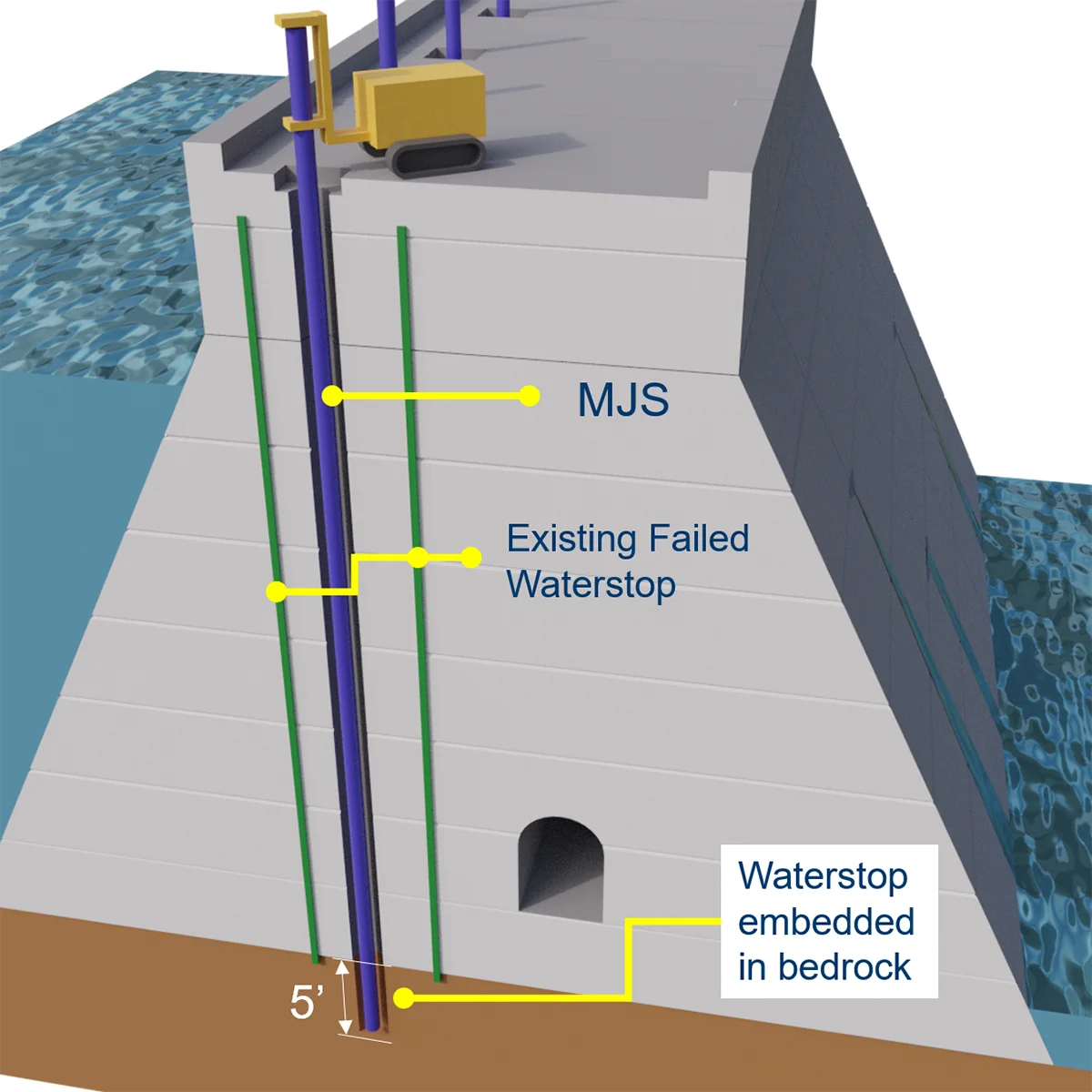
MJS works by installing a nominal 8-inch-diameter inflatable rubber seal into a drilled hole that runs the full length of the existing joint. The seal is uniformly pressurized to offset hydrostatic head, ensuring continuous water control even as the joint opens and closes with thermal or structural movement.
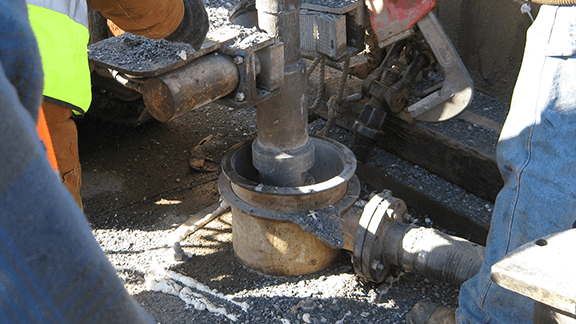
Installed in a Drilled Hole
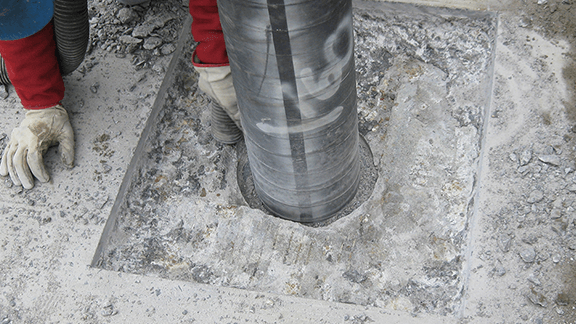
Inflatable rubber seal installation
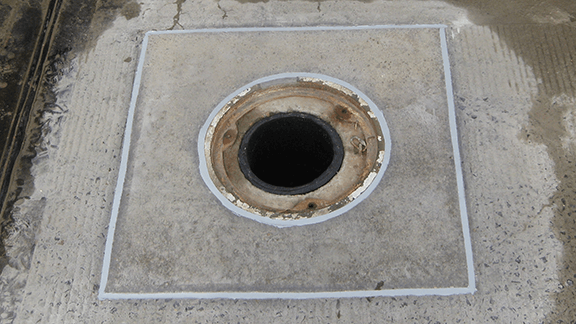
Completed
Step 01
Drill along the existing joint
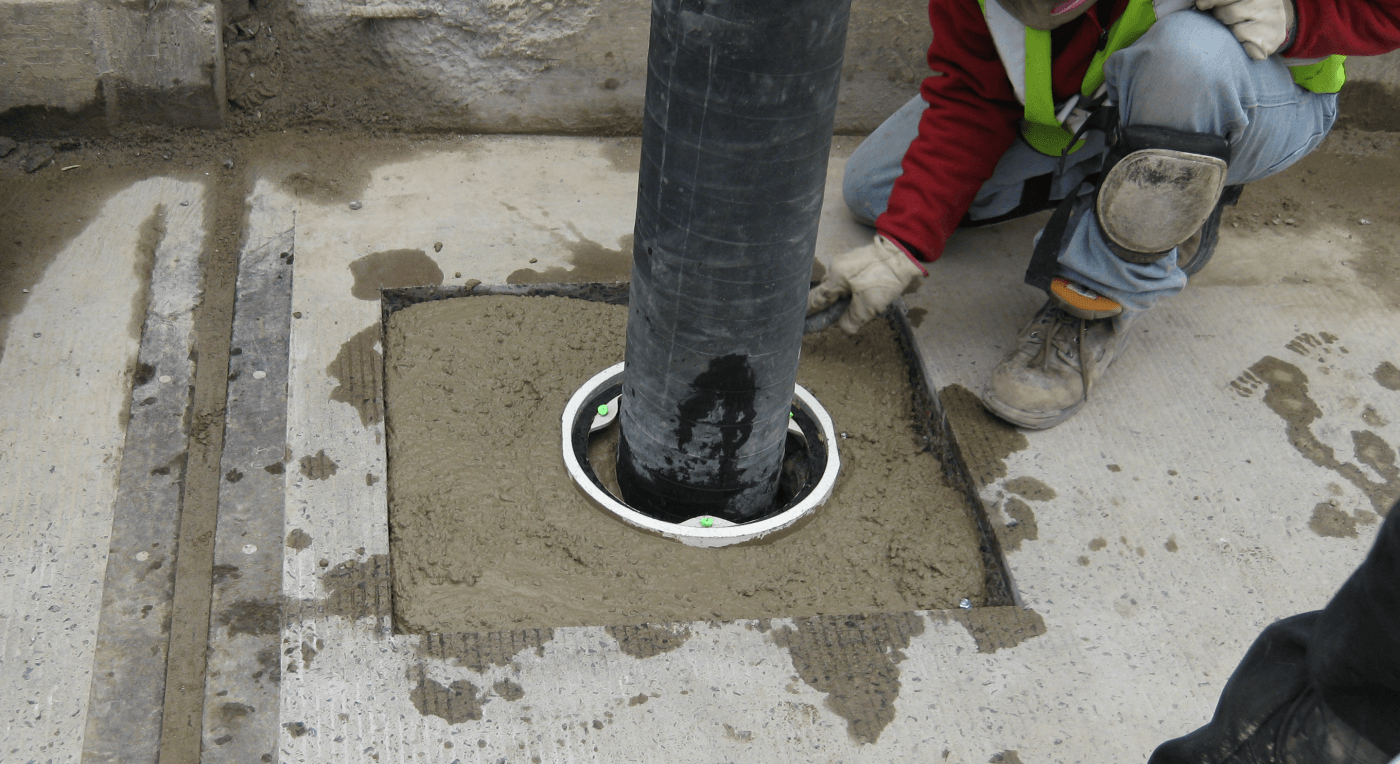
A hole is drilled along the length of the leaking joint — from the dam crest, wall top, or accessible face — extending into bedrock where required. This creates the channel for the MJS seal.
Step 02
Install the inflatable rubber seal
The MJS seal is placed into the drilled hole for the full length of the joint. The seal is designed to ensure continuity throughout the entire joint length, won’t track into an opened joint, and adapts to the drilled hole profile.
Step 03
Pressurize to offset hydrostatic head
The seal is uniformly pressurized to offset the hydrostatic pressure acting on the joint. This ensures that the system actively resists water intrusion rather than relying only on a passive barrier.
Step 04
Verify and maintain
The installed system can be inspected via remote camera, maintained in place, or removed and replaced if needed. Seepage can be measured before and after installation to confirm performance.
Technical Performance
Built for extreme pressure, depth, temperature, and long-term service
150 psi
Pressure Rating
Accommodates hydrostatic pressure heads up to 150 psi.
300+ ft
Depth Capacity
Designed for depths exceeding 300 feet below the water surface.
−50°F to 120°F
Temperature Range
Adapts to extreme weather conditions from arctic cold to desert heat.
8″ nominal
Seal Diameter
Inflatable seal installed into a drilled hole along the joint length.
Full length
Joint Continuity
Ensures water-control continuity throughout the entire joint — including into bedrock.
Remote camera
Inspectability
Can be inspected without physical access to the joint or underwater conditions.
Typical Applications
Where MJS joint repair is commonly considered
MJS is designed for heavy concrete structures where existing joint waterstops have failed and hydrostatic pressure, depth, or environmental conditions demand a more reliable and maintainable long-term solution.
Dams
Monolith joint leakage in concrete gravity dams, arch dams, and spillway structures where failed waterstops allow water to pass through joints under significant hydrostatic head.
Navigation Locks
Lock wall construction joints and monolith joints subject to repeated filling, cycling, and high-pressure conditions.
Large Retaining Walls
Heavy concrete retaining structures where water pressure against the wall drives leakage through existing joints.
Water & Wastewater Infrastructure
Concrete water-holding or water-retaining structures where joint water-tightness is operationally critical.
Spillways & Galleries
Internal gallery joints, spillway joints, and similar heavy-concrete joint conditions with high-pressure exposure.
The Strucproof Approach
Repair the joint at its source — not just its surface
step 01
Diagnose
Evaluate the joint condition, identify the failed waterstop, and quantify seepage and hydrostatic head.
step 02
Design
Design the MJS installation — including drill path, seal sizing, depth into bedrock, and pressurization plan.
step 03
Implement
Drill, install, and pressurize the MJS seal using licensed installation crews and quality-controlled methods.
step 04
Perform
Verify seepage reduction, support ongoing inspectability, and maintain long-term joint water-control performance.
Need to restore water control at a leaking joint?
If failed waterstops, high hydrostatic pressure, or recurring joint leakage are affecting a dam, lock, retaining wall, or other heavy concrete structure, Strucproof can help evaluate the joint condition and determine whether MJS is the right long-term repair strategy.