Water Management Solutions
Crack Injection
Targeted injection of resins or grouts into cracks to seal active leaks, restore water-tightness, and where required, re-establish structural load transfer across the fractured section.
Structural Restoration
Epoxy injection can restore up to 100% of the pre-crack load capacity of the concrete section.
Waterproofing Seal
Flexible acrylic and urethane grouts seal active water-bearing cracks, even under flowing conditions.
Two Placement Methods
Surface-mounted port injection for accessible cracks; interception grouting for deeper or backside defects.
Material Flexibility
Epoxy, polyurethane, or acrylic, each selected based on crack width, activity, moisture, and performance need.
overview
Every crack has a cause — and a correct way to seal it
Cracks in concrete are among the most common and consequential defects in below-grade and above-grade structures. They can transmit water, expose reinforcing steel to corrosion, reduce structural capacity, and compromise the service life of the building. Crack injection addresses these issues directly by filling the crack with an engineered material that either seals it against water, bonds it structurally, or both.
The right approach depends on why the crack formed, whether it’s still moving, how wide it is, whether water is present, and what performance outcome is required. A dormant, dry crack in a structural wall may need rigid epoxy injection to restore load transfer. An active, water-bearing crack in a basement may need flexible polyurethane to seal the leak and accommodate future movement. Fine hairline cracks may need ultra-low-viscosity acrylic gel to penetrate and seal.
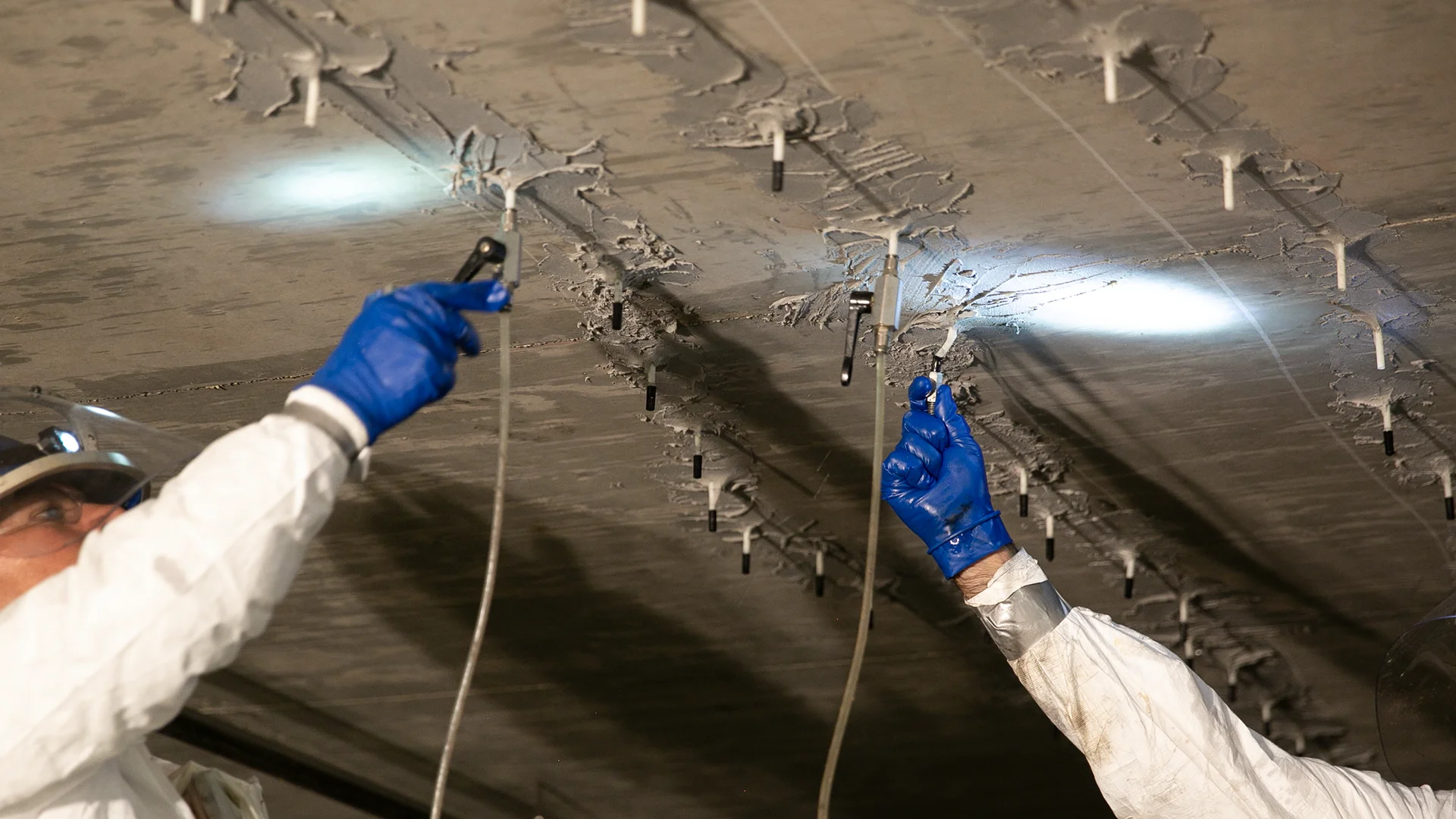
Strucproof positions crack injection as a core water-management solution and selects from surface-mounted injection, interception grouting, or a combination depending on the crack condition, structure type, and access.
Good fit when:
the challenge
Concrete gets hard and cracks
Cracking in concrete is not a question of “if” but “when.” Every concrete element is subject to shrinkage, thermal movement, structural loading, and environmental exposure. Cracks form for many reasons, and the correct repair depends on understanding the cause, the current state, and the performance requirement.
Common causes of cracking
- Drying shrinkage during curing
- Thermal contraction and expansion cycles
- Structural overload or unanticipated loading
- Foundation settlement or differential movement
- Plastic shrinkage (early-age surface cracking)
- Lack of or inadequate control joints
- Corrosion-induced cracking from reinforcing steel
- Seismic or vibration-induced fracture
Why surface-only repairs often fail
- Coatings and sealants only cover the crack mouth, not the full depth
- Water finds alternative paths once surface repairs are applied
- Surface treatments cannot restore structural bond across the crack
- Moving cracks re-open surface repairs over time
- Contaminated crack sidewalls (effluent, pH, corrosion) reduce adhesion
- Without full-depth injection, the crack remains an active defect
Injection Methods
Two approaches — matched to the crack condition and access
Crack injection uses one of two primary placement methods. The right choice depends on crack width, depth, the presence of water, access to the crack face, and whether the injection must reach the backside of the element.
Method 01
Surface-Mounted Port Injection
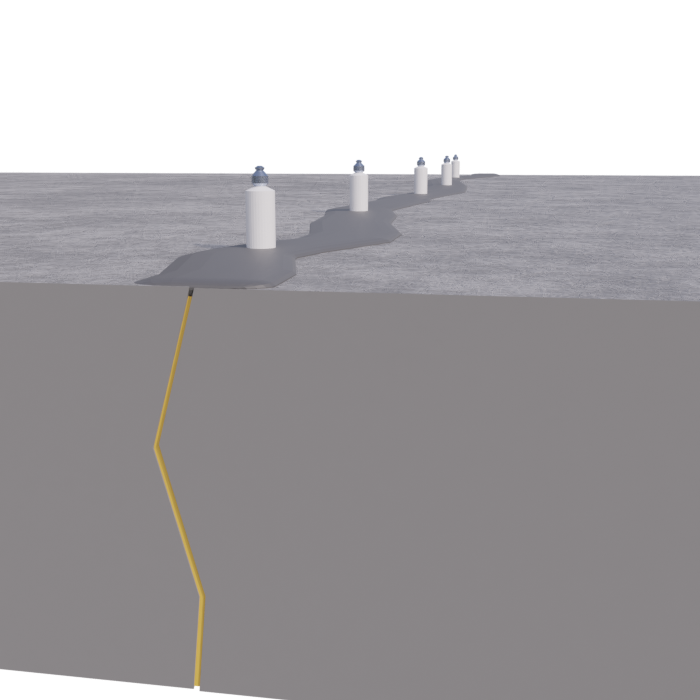
Injection ports are bonded directly to the crack face at regular intervals. The crack mouth is sealed with an epoxy paste to contain the injected material. Grout is pumped port-to-port at low pressure, filling the crack through its full depth from the accessible surface.
Pressure range
10–50 PSI (low pressure)
How it works
- Surface-mount injection ports along the crack at specified spacing
- Seal the crack mouth between ports with epoxy paste
- Inject from the lowest port upward (walls) or from one end across (slabs)
- Material fills the full crack width and depth under controlled low pressure
Best for
- Accessible, visible cracks on walls and slabs
- Structural epoxy repair of dormant cracks
- Narrower cracks where low-viscosity material and low pressure are sufficient
Method 02
Interception Grouting
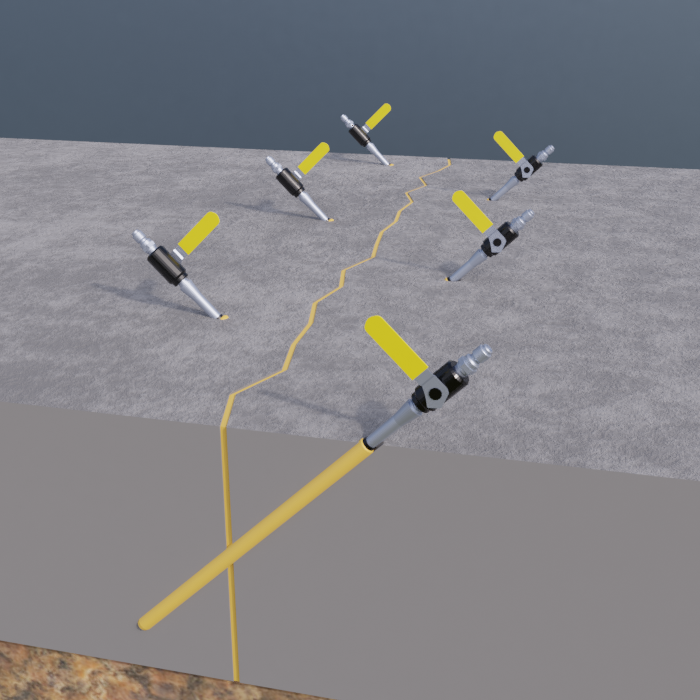
Holes are drilled at an angle through the concrete section to intercept the crack at its mid-depth. Mechanical packers are installed in the drill holes, and grout is pumped under moderate-to-high pressure to fill the crack from within the body of the concrete, reaching areas that surface-mounted injection cannot.
Pressure range
100–3,000 PSI (moderate to high pressure; max 600 PSI recommended to mitigate hydrofracking)
How it works
- Drill holes at ±45° off the face, distance from crack = t/2 (half the wall thickness)
- Hole spacing along crack = t/2 to 2t/3 for proper grout overlap
- Install mechanical packers in drill holes
- Inject grout under pressure to intercept and fill the crack at mid-section
Best for
- Active water-bearing cracks under hydrostatic pressure
- Cracks that cannot be fully accessed from the surface
- Deeper or thicker sections where surface injection alone is insufficient
- Waterproofing applications using urethane, acrylic, or micro-fine cement
Key Benefits
Seal the crack through its full depth and match the fix to the problem
Full-depth crack sealing
Injection fills the crack through the entire wall or slab thickness — not just at the exposed surface.
Works in active water conditions
Water-reactive polyurethane and acrylic grouts can be injected into cracks with flowing water — stopping leaks in real time.
Structural or waterproofing, or both
Epoxy restores structural bond; urethane and acrylic seal water. The right material is selected for the performance need.
Protects reinforcing steel
Sealing the crack eliminates the moisture and chloride pathway that accelerates corrosion of embedded reinforcement.
Accommodates crack movement
Flexible materials (urethane, acrylic gel) maintain the seal even if the crack opens, closes, or shifts over time.
Verifiable repair quality
Injected cracks can be cored, tested, or visually confirmed to verify material penetration and bond quality.
Typical Applications
Where crack injection is commonly applied
Crack injection is applicable wherever concrete or masonry has cracked and the crack is transmitting water, compromising structural capacity, or exposing reinforcement to corrosion.
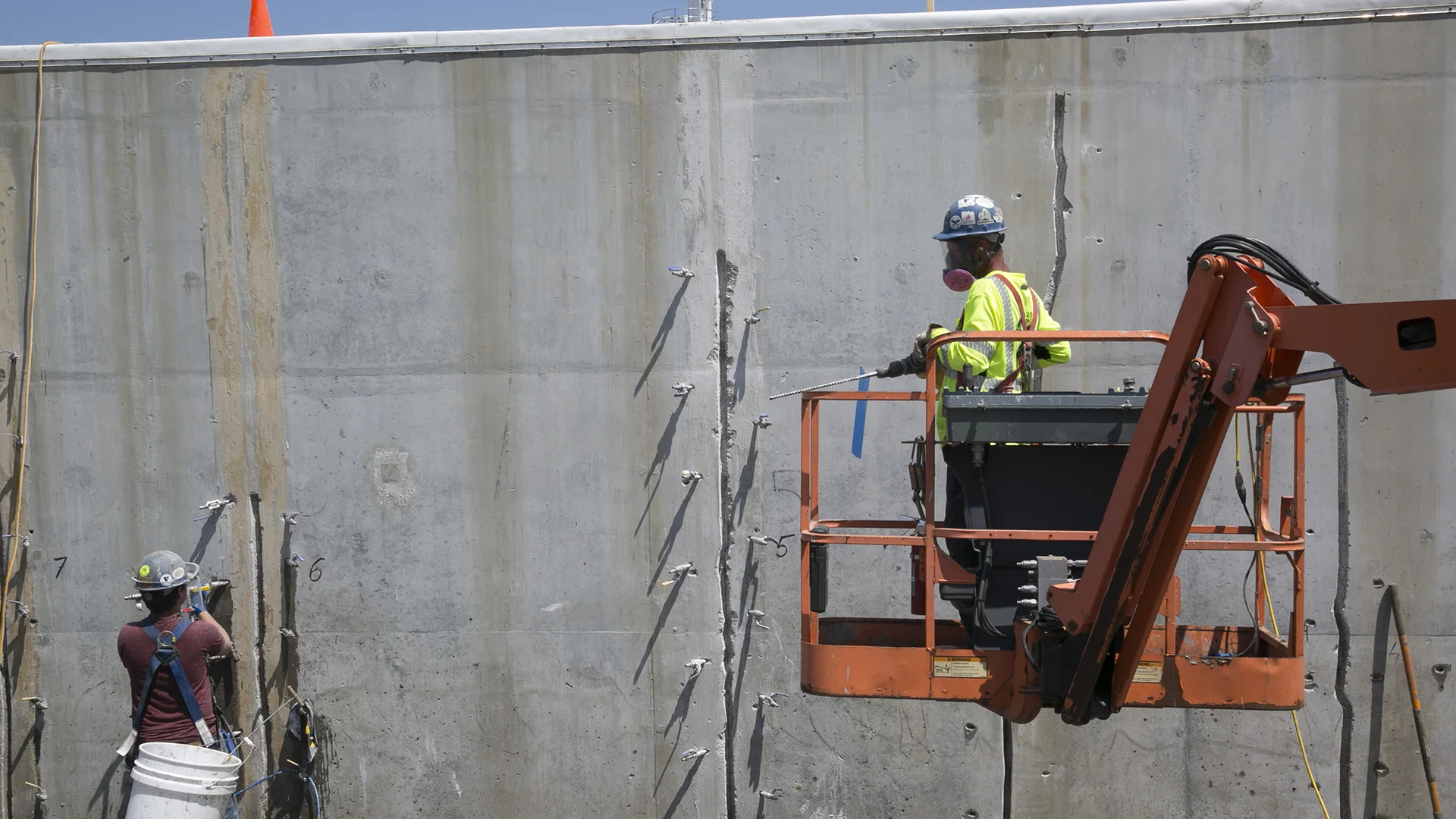
Below-Grade Walls & Foundations
Structural and waterproofing crack repair in basement walls, foundation walls, and retaining structures where cracks are transmitting water or compromising capacity.
Slabs, Floors & Raft Foundations
Crack sealing in elevated slabs, slab-on-grade, and raft foundations to stop upward-driven water and protect post-tensioning or mild steel reinforcement.
Tunnels, Shafts & Underground Chambers
Active leak sealing in tunnel linings, access shafts, and below-grade vaults where cracks are the primary water entry path.
Parking Garages
Structural epoxy repair and waterproofing injection in multi-level parking structures where cracks transmit chloride-laden moisture to reinforcement.
Water & Wastewater Structures
Crack sealing in tanks, reservoirs, treatment basins, and pipe structures where water-tightness is critical to function.
Dams & Hydraulic Structures
Crack injection across dam faces and hydraulic structures to reduce seepage rates and extend service life under sustained head pressure.
The Strucproof Approach
Understand the crack before you fill it
step 01
Diagnose
Identify the crack cause, measure width and activity, assess moisture condition, and determine wall/slab thickness for drill geometry.
step 02
Design
Select the injection material and placement method. Define port spacing, drill geometry, pressure limits, and material volume for full-depth fill.
step 03
Implement
Install ports or packers, seal the crack face, and inject under controlled pressure — monitoring grout migration and confirming full-depth penetration.
step 04
Perform
Verify water-tightness or structural bond, restore the concrete surface, and document the repair for long-term performance tracking.
Dealing with water intrusion you can’t reach from the outside?
If water is entering through a wall, slab, or joint that can’t be accessed from the exterior, Strucproof can help evaluate the leak path, select the right grout material, and engineer a curtain injection strategy that seals the source from the inside.